News
Site Editor
 Site
/uploads/image/6307135a29359.png
we look deeper into daily usage, it becomes clear that an SSD is no longer just a storage device—it becomes the foundation of your entire AI experience.
Site
/uploads/image/6307135a29359.png
we look deeper into daily usage, it becomes clear that an SSD is no longer just a storage device—it becomes the foundation of your entire AI experience.
How to Choose the Right SSD for Your AI Needs: A Complete Guide for the AI PC Era
Views: 5390
Author: Site Editor
Publish Time: 2026-01-09
Origin: Site
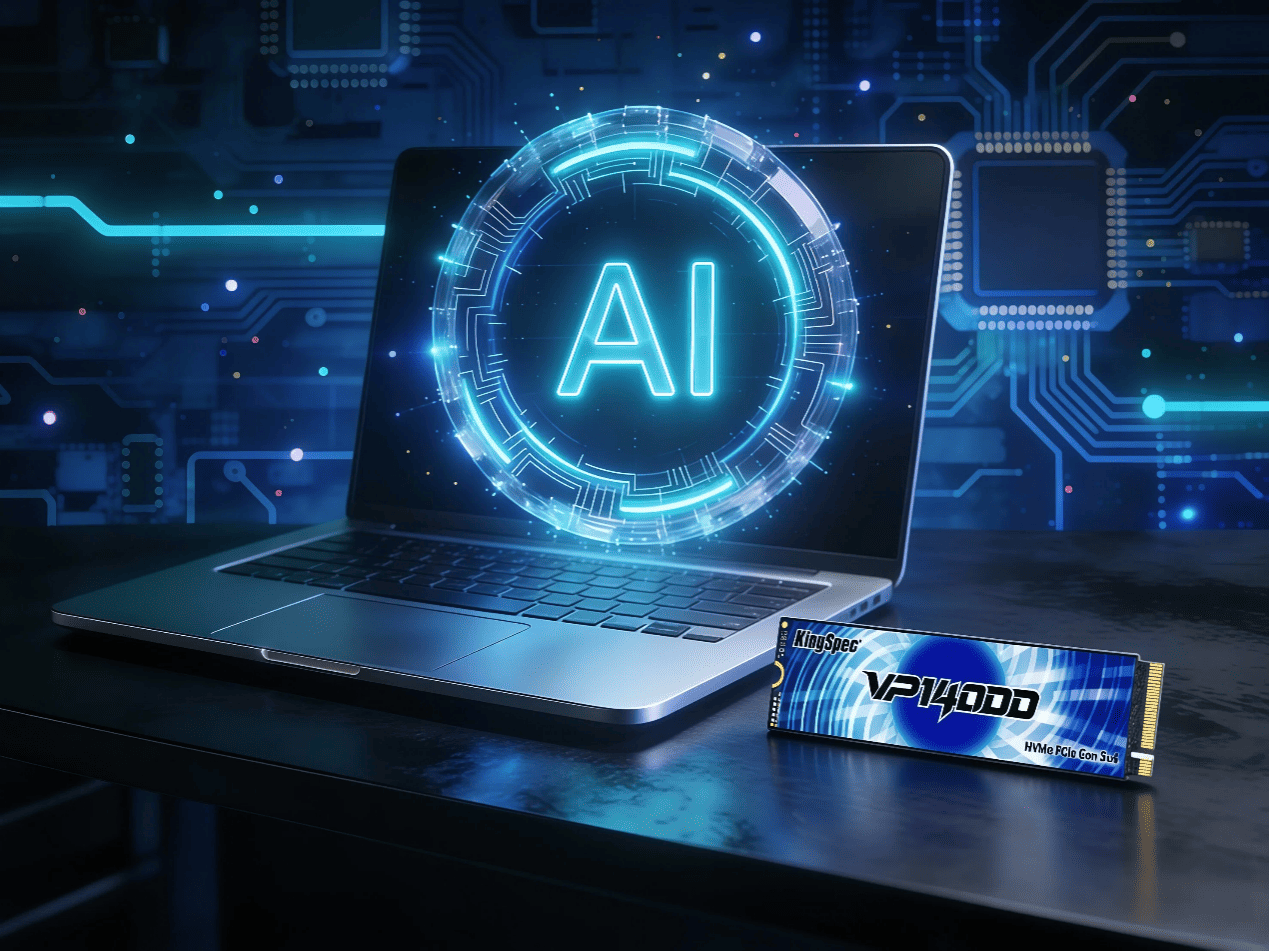
As the industry moves rapidly toward the AI PC era, choosing the right SSD has become one of the most important decisions for users who want fast, reliable, and smooth local AI performance. With market forecasts estimating that AI PC shipments will reach over 103 million units by 2025, more people are beginning to run AI applications locally for privacy, efficiency, and real-time responsiveness. However, as we look deeper into daily usage, it becomes clear that an SSD is no longer just a storage device—it becomes the foundation of your entire AI experience.
Why Your Next SSD Must Be Ready for Local AI
To begin with, many users still focus on CPU and GPU performance when thinking about AI. But when large AI models—often containing billions of parameters—need to be loaded from storage into memory, the SSD becomes the deciding factor for system responsiveness. Even if your processor and graphics card are powerful, an underperforming SSD will slow down model loading and cause long waiting times. This is why selecting the correct SSD for AI workloads is now essential for anyone planning to deploy local AI tools.
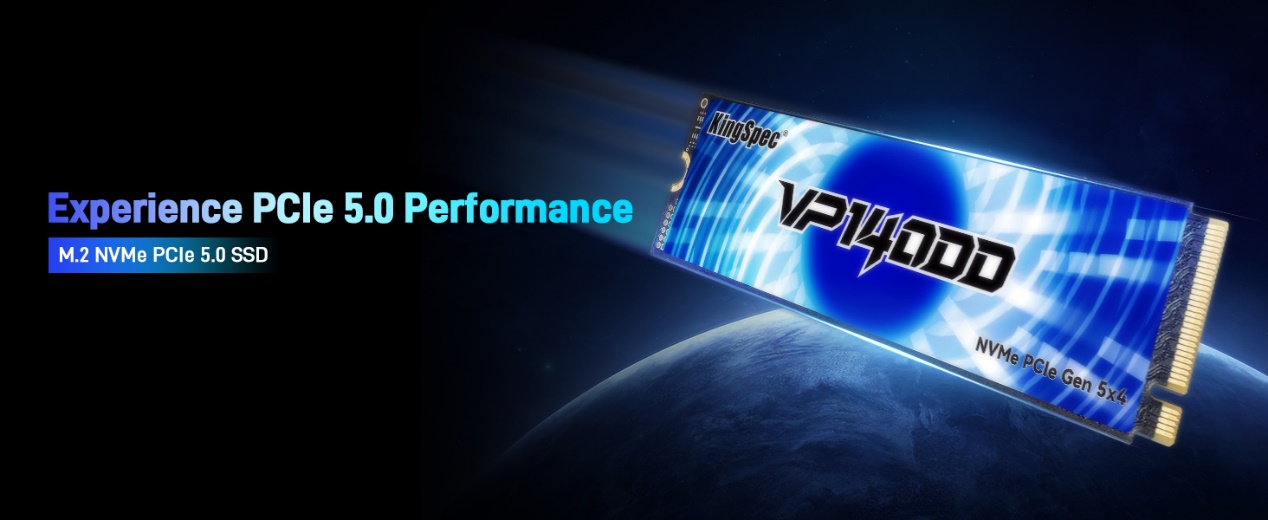
At the same time, many people are now using multiple models for different tasks such as coding, writing, image generation, or data processing. This creates high demands on storage capacity, read/write speed, and sustained performance. For users who want clear guidance, this article provides a practical decision framework to help choose the best SSD for AI workloads without unnecessary guesswork—and KingSpec VP14000 Series, a flagship PCIe 5.0 SSD, stands out as a top-tier solution tailored for AI needs.
How Local AI Workloads Challenge Your SSD
While gaming or office tasks mainly rely on consistent mid-range read/write performance, AI workloads are different. They stress an SSD in three important ways: capacity, speed, and durability.
1. Capacity Pressure: AI Models Are Large Files
First, AI models are extremely large. A quantized 7B (7-billion-parameter) model requires around 4–8GB of storage. A 67B model can take up more than 400GB. Most users also prefer keeping multiple models to switch between different use cases. For this reason, 1TB storage is now considered the minimum for AI PCs, while 2TB–8TB SSDs are becoming more common for power users. VP14000 Series SSD offers flexible capacity options of 1TB/2TB/4TB, easily accommodating multi-model workflows for mainstream and advanced AI users.
2. Speed Pressure: Loading Time Defines Your Experience
Next, loading speed determines the practicality of using AI locally. When an AI model is loaded from storage, both sequential read speed and random read performance matter.
With a PCIe 4.0 SSD, loading an 18.5GB model takes around 20.5 seconds.
With a PCIe 5.0 SSD, the time drops to 13.3 seconds, improving loading speed by over 35%.
This difference is very noticeable in daily workflow. Faster sequential read speeds reduce waiting time, while high random read IOPS enhance performance during continuous dialogue or generation tasks.
3. Endurance & Reliability: AI Generates Constant Read/Write Cycles
Finally, AI applications read and write data continuously, especially when performing multi-turn conversations or running fine-tuning tasks. This means high endurance (TBW) and stable long-term performance are essential. Any drop in speed or data errors could interrupt hours of computation. Therefore, an SSD designed with strong durability becomes the safer choice for AI-focused workloads.
Three-Step SSD Selection Guide for Different AI Users
Because different users have different needs, the following matrix helps match usage scenarios with recommended SSD specifications. This supports informed decision-making while optimizing your budget.
User Type | Main Use Case | Recommended Capacity | Interface | Key Performance | Critical Features | Budget | Recommended Product |
Entry AI Users | Basic usage, 7B–14B models, light testing | 512GB–1TB | PCIe 4.0 x4 | Seq. Read 5,000–7,000 MB/s, 600K+ IOPS | Stable TLC, good warranty | Cost-effective | - |
Mainstream AI Users | Daily tasks, 14B–32B models, creative work | 1TB–2TB | PCIe 4.0/PCIe 5.0 | Seq. Read 7,000–12,000 MB/s, 1,000K+ IOPS | Strong endurance, heat control | Mid-range investment | KingSpec VP14000 (1TB/2TB) |
Advanced Users / Creators | Heavy AI, 70B+ models, multi-model workflows | 2TB–8TB | PCIe 5.0 x4 | Seq. Read 12,000+ MB/s, 1,500K+ IOPS | Top-tier controller & NAND, premium cooling | High-performance budget | KingSpec VP14000 (2TB/4TB) |
Is PCIe 5.0 Worth It for AI?
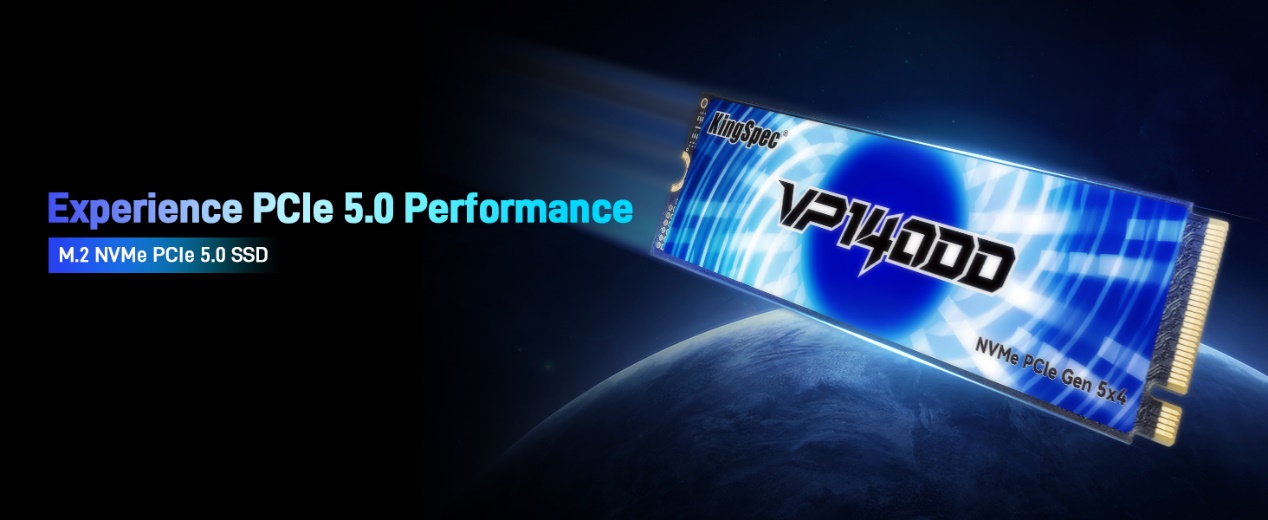
PCIe 5.0 SSDs deliver double the bandwidth of PCIe 4.0. For users who load large AI models frequently, this advantage directly translates into shorter loading times and smoother interaction. However, it is important to note that PCIe 5.0 drives generate more heat, so proper cooling is required. Additionally, your motherboard and processor must support PCIe 5.0 M.2 SSD slots. For anyone building a new AI-focused PC, PCIe 5.0 is a strong long-term investment.
VP14000 Series: Understanding Technology Choices
When selecting an SSD, it helps to understand how current products represent different design approaches.
High-end flagship SSDs use advanced controllers and premium NAND to deliver extremely high sequential read speeds (14,000 MB/s or more) and over 2,200K IOPS. They are ideal for users handling large AI models and big data.
DRAM-less SSDs with HMB technology offer excellent cost-performance balance while maintaining fast PCIe 5.0 speeds. These are suitable for users who want strong performance without high cost.
Local technology leaders with 3D NAND architecture also provide competitive performance for AI model loading and long-term reliability.
By comparing these categories, users can clearly understand how different technologies affect thermal behavior, speed, and durability.
Conclusion: Choose an SSD That Supports Your AI Future
In summary, selecting the right SSD is essential for anyone planning to run AI locally. Capacity determines how many models you can store, speed determines how fast models load, and endurance ensures long-term stability. Whether you are an entry-level learner or a professional creator, understanding these factors helps you invest wisely and maximize your AI productivity.
If you are looking for a dependable SSD supplier with strong manufacturing capability, stable product quality, and solutions suitable for AI PCs, KingSpec offers a full range of SSDs designed for both mainstream and high-performance AI workloads.
Upgrade your storage today and unlock the full potential of your AI setup with KingSpec.


