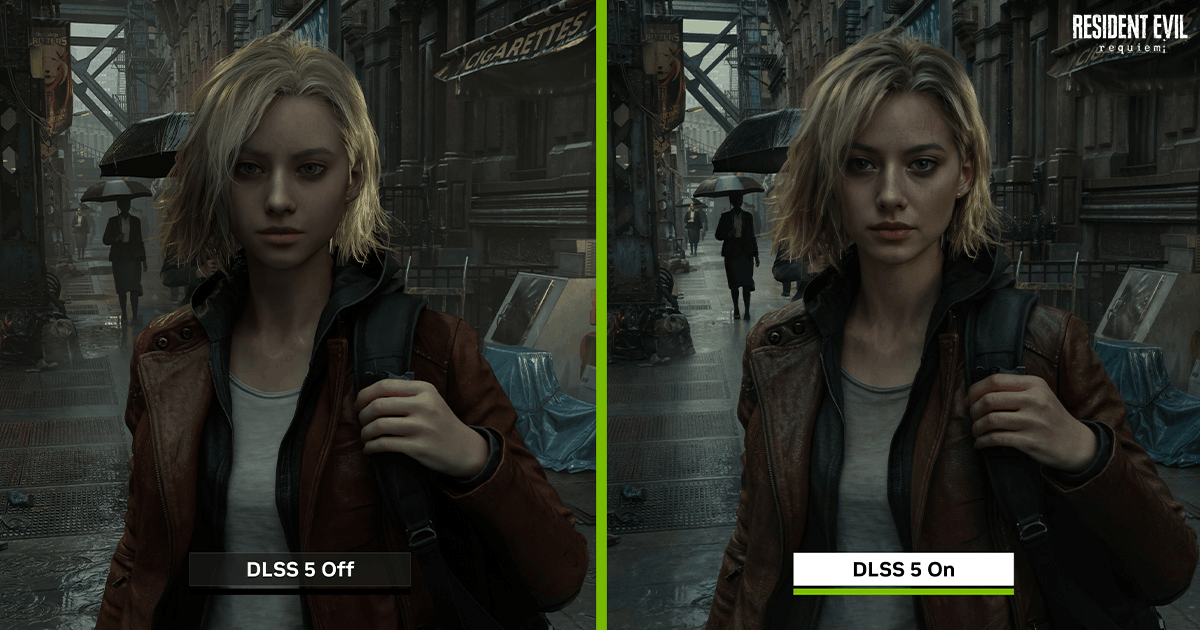
1. Why DDR5 May Become More Important in the AI Gaming Era
AI is no longer just changing productivity software or cloud computing. It is now reshaping modern game rendering technology as well.
Over the past few years, NVIDIA’s DLSS technology has evolved from a simple AI upscaling feature into a core part of how modern games achieve higher frame rates and better visual quality. From DLSS 1 to DLSS 4, the direction has been clear: reduce the pressure of native GPU rendering and allow AI to participate more deeply in image generation.
Now, conversations around “DLSS 5” are already starting across gaming communities, hardware forums, and AI graphics discussions.
While NVIDIA has not officially released DLSS 5 specifications, industry expectations are increasingly focused on several possible directions:
Higher AI rendering participation
More advanced frame generation
AI-assisted scene prediction
Lower CPU/GPU rendering overhead
Real-time high-resolution image generation
More intelligent texture and cache management
At first glance, this sounds like good news mainly for GPUs. But the real story may be much bigger.
As AI begins generating more visual data dynamically, PC hardware may enter a new phase where system-wide data coordination becomes more important than raw GPU power alone.
And in that transition, DDR memory could become one of the most critical performance factors.
2. From DLSS 1 to DLSS 5: How AI Is Changing Game Rendering
To understand why memory matters more now, it helps to look at how DLSS has evolved.
2.1 DLSS 1: AI Anti-Aliasing
The first generation of DLSS mainly focused on AI-assisted anti-aliasing. The technology reduced jagged edges while attempting to maintain image clarity.
At that stage, the AI workload was relatively limited.
2.2 DLSS 2: AI Super Resolution
DLSS 2 became the real turning point.
Instead of rendering every frame at native resolution, games could render internally at a lower resolution and let AI reconstruct a higher-resolution image.
This dramatically improved FPS while preserving image quality.
2.3 DLSS 3: Frame Generation
DLSS 3 introduced AI-generated frames.
Rather than only reconstructing pixels, the GPU began generating entirely new frames between rendered frames using motion vectors and historical frame data.
This shifted AI from “image enhancement” to “image creation.”
2.4 DLSS 4: Multi Frame Generation
With DLSS 4, AI frame generation became even more aggressive.
Instead of generating a single intermediate frame, AI could participate in multi-frame prediction and interpolation, further reducing rendering pressure on the GPU.
This also increased the amount of temporary data that needed to be processed in real time.
2.5 What Could DLSS 5 Look Like?
Although DLSS 5 has not been officially announced, many hardware analysts expect the next stage to move toward:
AI scene prediction
AI-assisted texture generation
Real-time motion forecasting
Dynamic object reconstruction
Larger real-time cache systems
More advanced frame interpolation
In other words, games may no longer rely entirely on traditional “hard rendering.”
AI could begin predicting future frames before they are fully rendered.
And that changes the hardware equation significantly.
3. Lower GPU Pressure Does Not Mean Lower System Pressure
One common misconception is that AI rendering automatically reduces total system workload.
In reality, the opposite may happen.
When AI starts generating frames dynamically, the entire PC platform must exchange more data at much higher speeds.
That includes:
All of this information must move rapidly between the CPU, GPU, RAM, and storage system.
As a result, the bottleneck may shift away from pure GPU rendering performance and toward system-level data throughput.
This is exactly why DDR memory is becoming more important in modern gaming systems.
4. Why DLSS 5 Could Increase DDR Memory Demands
AI Frame Generation Requires Constant Data Access
Traditional rendering pipelines relied heavily on GPU computation.
But AI-generated rendering introduces a more collaborative workflow between components.
For example, DLSS systems continuously access:
As frame generation complexity increases, communication between CPU and GPU becomes more frequent.
That means memory bandwidth matters more than before.
In older gaming architectures, the GPU often handled the majority of rendering tasks independently.
In AI-assisted rendering, the system operates more like a coordinated data network.
5. High-Frequency DDR5 May Become More Important Than Low Latency
For years, many esports players focused heavily on memory latency.
Low CAS latency (CL) DDR4 kits were widely recommended for maximizing FPS in competitive games.
That logic may gradually change in the DLSS era.
Why?
Because AI-assisted rendering depends increasingly on data throughput rather than only rapid single-response timing.
In future AI-generated gaming workloads:
Data bandwidth becomes more important
Large-scale cache movement increases
Texture streaming expands
AI buffer requirements grow
This is where high-frequency DDR5 begins to show clear advantages.
For example:
| Gaming Scenario | More Important Factor |
| Traditional esports games | Lower latency |
| AI-generated gaming workloads | Higher frequency & bandwidth |
DDR5’s higher transfer rates make it better suited for continuous AI-related data scheduling.
Especially in 2K, 4K, and future AI-heavy gaming environments, bandwidth may matter more than ever.
6. Game Memory Usage Is Already Increasing Rapidly
Modern AAA games are already consuming much larger amounts of system memory than previous generations.
Titles such as:
Resident Evil Requiem
Assassin's Creed Shadows
Hogwarts Legacy
have demonstrated how demanding modern game assets and texture systems have become.
As DLSS technologies evolve further, several trends are likely:
4K gaming becomes more mainstream
Ultra-high texture packs become standard
AI texture caching grows significantly
Background AI processing expands
Because of this, 16GB RAM may gradually become the minimum baseline for high-end gaming systems.
Meanwhile, 32GB configurations are increasingly becoming the recommended setup for modern AAA gaming, streaming, and multitasking.
7. Why DDR5 Is Better Positioned for the DLSS 5 Era
7.1 Higher Memory Bandwidth
DDR5 was designed for higher throughput workloads.
Compared with DDR4, DDR5 offers:
Higher transfer rates
Better parallel data handling
Improved bandwidth scalability
Greater efficiency for multi-threaded tasks
These advantages align closely with the needs of AI-assisted rendering systems.
7.2 Better Future Platform Compatibility
New-generation CPU platforms are already transitioning fully toward DDR5.
Future GPU architectures and AI acceleration technologies are also likely to optimize increasingly around DDR5 memory ecosystems.
For users building systems today, DDR5 offers stronger long-term compatibility.
7.3 Improved Multitasking Performance
Modern gamers rarely run only a game anymore.
Typical gaming environments now include:
Many gamers still focus mainly on GPU upgrades, but memory bandwidth is quietly becoming a bigger factor in AI-assisted rendering workloads.
8. The Future of Gaming PCs Is System Coordination
One of the biggest changes in the AI gaming era is this:
The GPU is no longer the only performance center.
Future gaming systems increasingly rely on cooperation between:
GPU for AI rendering
CPU for scheduling and coordination
DDR memory for data movement
SSD storage for rapid asset loading
In other words, PC performance is becoming a system-level collaboration challenge.
A powerful GPU alone may no longer guarantee the best gaming experience.
9. Recommended Memory Configurations for the AI Gaming Era
As DLSS technologies continue evolving, memory recommendations may shift accordingly.
| User Type | Recommended Configuration |
| Mainstream 1080P gamers | 16GB DDR5 6000MT/s |
| 2K & AAA gamers | 32GB DDR5 6400MT/s |
| Streamers & content creators | 32GB–64GB high-frequency DDR5 |
For users planning long-term gaming upgrades, moving to DDR5 now may provide better platform longevity and smoother future compatibility.
10. Why High-Frequency DDR5 Matters More Than Ever
In the AI gaming era, memory is no longer just about “having enough capacity.”
It is about whether the system can continuously deliver stable, high-speed data flow between the CPU and GPU.
As AI rendering technologies become more advanced, high-frequency DDR5 memory is gradually becoming a critical part of modern gaming platforms.
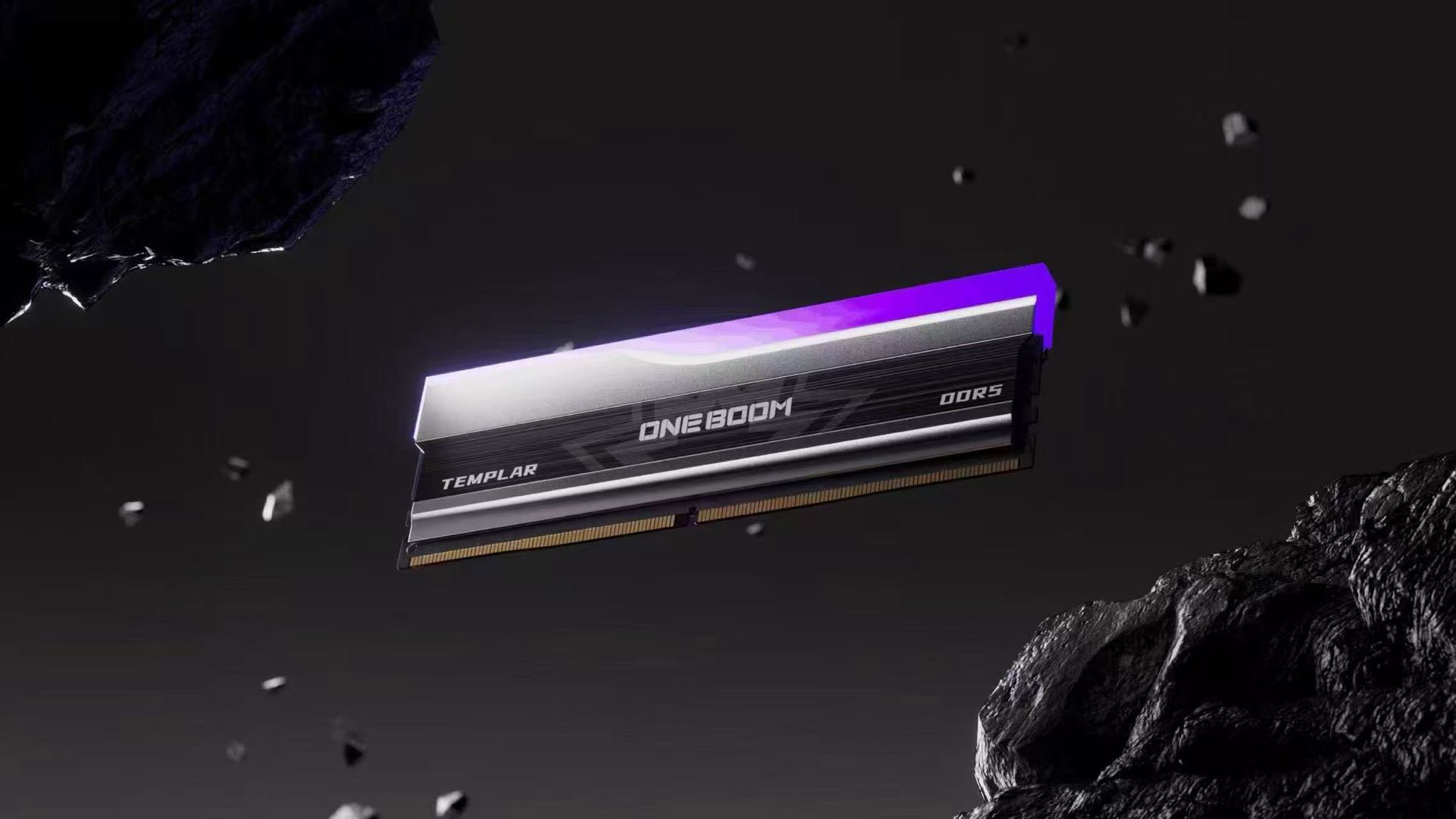
KingSpec OneBoom DDR5 series is designed for high-performance gaming and future-ready PC platforms, featuring:
High-frequency DDR5 performance
Stable data transmission
Gaming-oriented heatsink designs
Strong compatibility with modern platforms
Smooth multitasking performance
For gamers using high refresh rate displays, AI frame generation, streaming tools, and demanding AAA titles, stable memory bandwidth can significantly improve overall system responsiveness.
11. DLSS 5 May Change More Than Image Quality
AI is fundamentally changing how games are rendered.
The future gaming experience may no longer depend only on GPU power.
Instead, overall platform coordination — including memory bandwidth, storage speed, CPU scheduling, and AI processing efficiency — will increasingly determine real-world performance.
As AI begins generating game visuals dynamically, one question becomes more important than ever:
When the future of gaming is built on AI-generated frames, will the graphics card still be the only hardware bottleneck?
12. FAQ
12.1 Will DLSS 5 require more system memory?
While NVIDIA has not officially confirmed DLSS 5 specifications, future AI-assisted rendering technologies will likely increase real-time data caching and memory bandwidth demands. As games rely more on AI frame generation and texture prediction, system memory usage is expected to continue growing.
12.2 Is DDR5 better for AI-powered gaming?
DDR5 offers higher bandwidth and faster data transfer speeds compared with DDR4, making it more suitable for AI-assisted gaming workloads, especially in high-resolution and high-refresh-rate environments.
12.3 Is 16GB RAM still enough for modern AAA games?
For many mainstream games, 16GB remains usable today. However, newer AAA titles, background applications, streaming tools, and AI-related gaming features are already pushing memory usage higher. Many gamers now consider 32GB a more future-ready option.
12.4 Does DLSS reduce GPU workload completely?
Not exactly. DLSS reduces part of the traditional rendering pressure on GPUs, but AI-generated frames also require additional data exchange between the CPU, GPU, memory, and storage system. In some scenarios, overall system coordination becomes even more important.
12.5 Why does memory frequency matter more in AI gaming?
AI-assisted rendering relies heavily on fast data movement and real-time caching. Higher-frequency DDR5 memory can improve data throughput, helping the system handle frame generation, texture streaming, and multitasking more efficiently.
12.6 Will SSD performance also affect future gaming experience?
Yes. Modern games already depend heavily on fast asset streaming and texture loading. As AI-generated rendering evolves, high-speed NVMe SSDs may become increasingly important for reducing loading delays and supporting larger real-time game assets.
12.7 What kind of DDR5 configuration is recommended for future gaming PCs?
For mainstream gaming, 16GB DDR5 6000MT/s is a reasonable starting point. For 2K/4K AAA gaming, streaming, and multitasking, many users are moving toward 32GB high-frequency DDR5 configurations for better long-term performance.