Artificial intelligence is entering a new phase. For the past few years, tools like ChatGPT have transformed how we write, search, and communicate. But a new category is now emerging, the AI agents, and one of the most talked-about projects in this space is OpenClaw.
Unlike traditional AI tools, OpenClaw doesn’t just respond to prompts. It is designed to take action, execute tasks, and operate continuously in the background. In this article, we’ll go beyond a basic introduction. We’ll explore What OpenClaw is? How it works under the hood? Why it enables true personalization and automation? And what it means for the future of AI?
From Chatbots to Agents: Why OpenClaw Matters
The evolution of AI can be roughly understood through a few key milestones:
GPT-3.5 — the “iPhone moment” of AI
GPT-4o / Gemini — multimodal capabilities
New reasoning models — improved planning and logic
Agent frameworks like OpenClaw — AI that can act
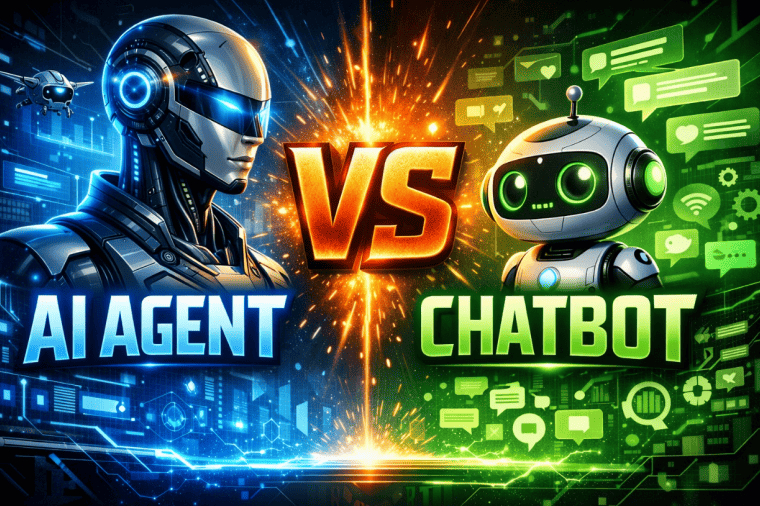
This progression reflects a fundamental shift from “AI that answers” to “AI that executes”. And OpenClaw sits right at the center of this transition.
What Is OpenClaw? And why it’s special?
At its core, OpenClaw is: A self-hosted gateway that connects messaging platforms with AI agents, enabling real-time, action-oriented workflows. In practical terms, it acts as a bridge between:
Communication tools (WhatsApp, Telegram, Discord, etc.)
AI agents capable of executing tasks
Once deployed locally (on your PC or server), OpenClaw becomes a persistent AI layer embedded into your daily digital environment.
One of the reason that makes OpenClaw so special is how it structures its system. Instead of treating AI as a stateless tool, it treats it more like a living entity with Identity, Memory, Tools and Behavior. This design philosophy is what enables both deep personalization and long-term autonomy.
Inside OpenClaw: Architecture and Runtime Logic
OpenClaw organizes its system into a structured workspace:
openclaw/workspace/
├── memory/
├── skills/
├── AGENTS.md
├── BOOTSTRAP.md
├── HEARTBEAT.md
├── IDENTITY.md
├── MEMORY.md
├── SOUL.md
├── TOOLS.md
└── USER.md
1. Identity System: Defining “Who the Agent Is”
OpenClaw starts by establishing identity:
BOOTSTRAP.md — initializes the agent (like a bootloader)
IDENTITY.md — defines personality and characteristics
USER.md — stores user information
SOUL.md — defines core principles and behavioral boundaries
This is fundamentally different from traditional AI. Most AI systems reset context every session. OpenClaw, by contrast, builds a persistent persona. This is the foundation of true personalization.
2. Capability Layer: Tools, Skills, and Environment
Once identity is defined, the agent needs the ability to act.
AGENTS.md — defines how the system operates
skills/ — executable capabilities (scripts, APIs, automation)
TOOLS.md — environment-specific configurations
This separation is critical, which means: Skills = reusable capabilities & Tools = your personal environment. This design allows OpenClaw to be both portable and deeply customized.
3. Memory System: From Data to Experience
OpenClaw solves one of the biggest limitations of traditional AI — memory.
OpenClaw is not just storage, it will learn and evolve. Periodically, this system will do the following things to maintain the memory loop:
Reads recent logs
Extracts key insights
Updates long-term memory
Removes outdated information
4. Heartbeat System: Continuous Operation
Most AI tools only work when prompted. OpenClaw is different. Thanks to its Heartbeat System, OpenClaw can work for you, even when you’re not actively using it.
Feature | Heartbeat | Cron |
Timing | Flexible | Fixed |
Context | Context-aware | Stateless |
Use case | Ongoing tasks | Scheduled jobs |
Why OpenClaw Feels Truly Personal & Enables End-to-End Automation
Unlike most AI tools that feel generic and session-based, OpenClaw is designed to deliver a deeply personalized and persistent experience. This is largely due to its local-first architecture, where data such as user preferences, behavioral patterns, and interaction history are stored directly on the user’s device. Over time, this allows the system to build a unique understanding of each user, transforming the AI from a reactive tool into a continuously evolving assistant.
Its self-hosted nature further enhances this personalization. Running locally means OpenClaw can directly access files, execute system-level commands, and integrate with private environments. This level of control enables much deeper workflow integration compared to cloud-based AI, effectively embedding the agent into the user’s daily operations.
Another key advantage is its LLM-agnostic design. By separating the reasoning engine from the execution layer, OpenClaw allows users to switch between different models based on their priorities, whether that be performance, cost, or data privacy. This modularity makes the system both flexible and future-proof.
Beyond personalization, OpenClaw stands out for enabling true end-to-end automation. Instead of merely suggesting actions, it can execute them through a tool-calling framework. At its core is an agentic loop that continuously plans, executes, observes, and adjusts. When errors occur, the system can self-correct and retry, making it capable of handling real-world, multi-step tasks. Combined with its ability to connect APIs, operating systems, and communication platforms, OpenClaw can transform a simple instruction into a fully completed workflow — from data processing to final delivery.

Practical Applications of OpenClaw AI Agents
One of the reasons OpenClaw has attracted attention is its versatility. AI agents built with the framework can be used in a wide range of real-world scenarios.
1. Automated Social Media Content Creation
Maintaining an active social media presence requires constant content production. AI agents can automate much of this process.
For example, an AI workflow might automatically generate product images, write platform-specific captions, schedule posts across different channels, and monitor engagement metrics.
This allows marketing teams to scale content production while reducing the manual workload involved in managing multiple platforms.
2. AI-Powered Research Assistants
AI agents can also function as digital research assistants. They can scan online resources, gather relevant information, summarize key insights, and generate structured reports.
Organizations can deploy these agents to monitor industry trends, track competitor activity, or compile research data for internal analysis.
3. Automated Data Analysis
Businesses generate vast amounts of operational data every day. AI agents can analyze this information automatically and convert it into actionable insights.
For instance, an AI agent could process datasets, identify patterns, generate dashboards, and deliver regular performance reports to management teams.
4. Intelligent Customer Support
Customer support teams often spend a large portion of their time responding to routine inquiries. AI agents can help streamline this process.
By analyzing incoming messages, categorizing support requests, and generating suggested responses, AI agents can assist human support teams and even resolve simple issues automatically.
5. Cross-Platform Workflow Automation
Perhaps the most powerful application of AI agents is their ability to automate complex workflows across different systems.
An AI agent could collect information from multiple platforms, process the data, generate reports, update databases, and notify team members—all without human intervention.
This type of automation has the potential to significantly improve operational efficiency across organizations.
The Future of AI Agents
AI agents are still an emerging technology, but their potential impact is significant. As frameworks like OpenClaw continue to evolve, we can expect to see more organizations adopting autonomous AI systems to automate complex workflows.
From marketing and research to data analysis and customer service, AI agents are beginning to transform how work gets done.
However, successful AI automation will depend not only on intelligent software frameworks but also on the infrastructure that supports them. Scalable computing resources, efficient data management, and high-performance storage will all play essential roles in enabling the next generation of AI-powered systems.