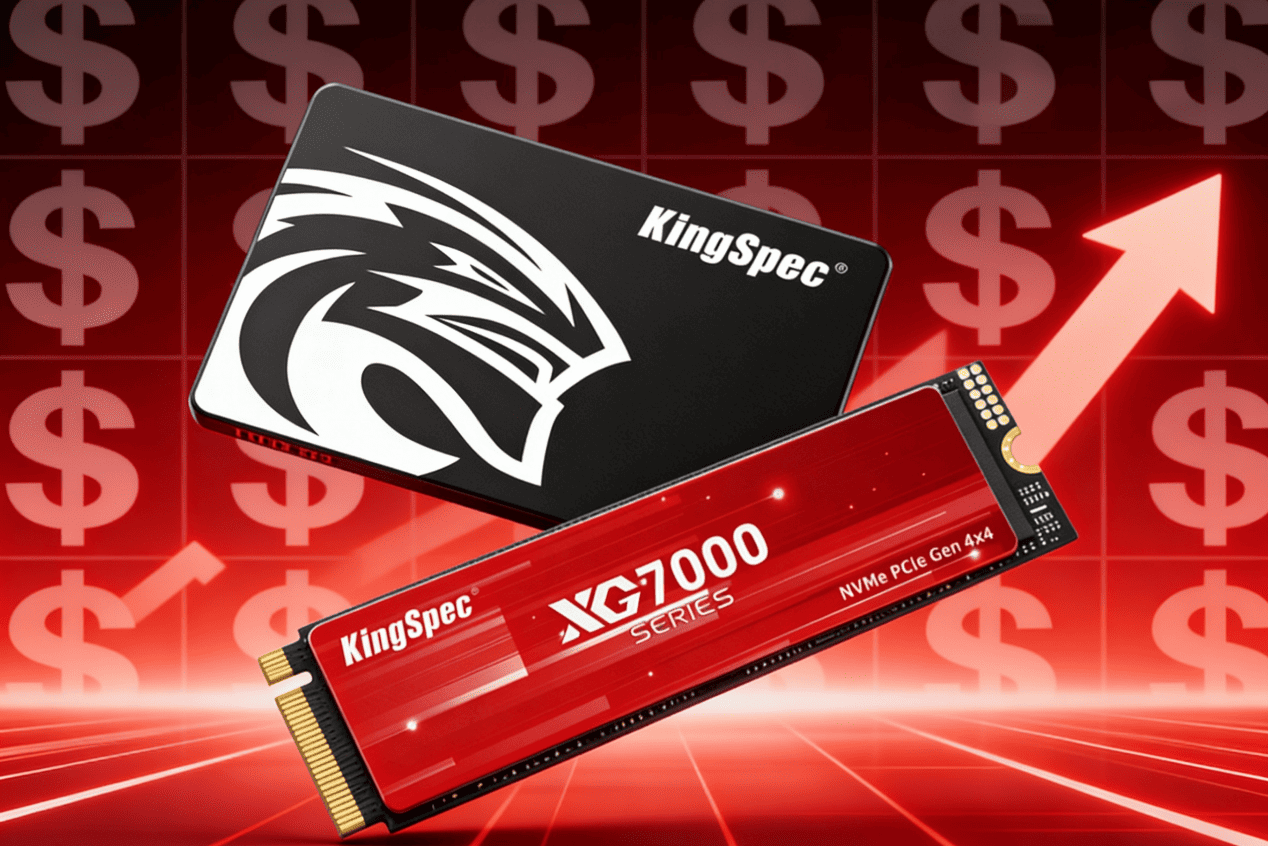
In the past year, many users have noticed an unusual trend: SSD prices seem to change almost every day. Some consumer 1 TB SSD models, which could be found around $45–$60 at the start of 2025, have climbed to around $70–$90 or more, representing roughly a 50–80% increase in many regions since September 2025. Simultaneously, the memory module market has experienced even more dramatic increases: average DRAM prices — including both DDR4 and DDR5 — have surged spectacularly as supply tightens. DDR5 DRAM chip spot prices have recorded increases exceeding 300%, and DDR4 DRAM chips have also seen price growth of approximately 158%, reflecting severe supply constraints in the memory market.
I. Why SSD Prices Are Rising So Fast
To begin with, this round of SSD price increases is not random. It is caused by a serious supply-demand imbalance, and AI servers are the core driving force. Unlike past consumer electronics cycles, the rise of AI has reshaped storage needs in a way the industry has never seen before.
1. The demand shock created by AI servers
One reason for the SSD price increase is the explosive growth of AI server demand. AI models require not only strong computing power from GPUs but also massive “storage power” to feed and store data during training and inference. As a result, AI servers need far more storage chips than ordinary servers.
For example:
A typical AI server uses about 8 times more DRAM than a standard server.
It also uses about 3 times more NAND Flash, the core material inside every SSD.
Large cloud providers are now building AI data centers at record speed. Because AI applications have moved rapidly from the training stage to the inference stage, the need for storage capacity and faster response times keeps rising. This forces companies to purchase enterprise SSDs and NAND Flash in huge quantities. Such demand growth directly tightens supply for the entire market.
2. Supply challenges caused by limited manufacturing capacity
Alongside the strong demand, the supply side is also experiencing constraints. Building a new semiconductor factory usually takes at least two years. Therefore, when demand surges suddenly, supply simply cannot expand quickly enough.
At the same time, chipmakers such as Samsung and SK Hynix have shifted much of their existing capacity toward more profitable products like HBM and DDR5, which are essential for AI servers. As a result, production capacity for DDR4, consumer SSDs, and other mature products has been sharply reduced.
This leads to a surprising situation:
DDR4, once considered a product that was near the end of its lifecycle, is now more expensive than DDR5 in many markets because supply has dropped much faster than demand.
3. The “amplification effect” across the supply chain
In addition to the supply and demand imbalance, market expectations also play a role. When the industry believes prices will continue rising, downstream distributors may buy more inventory or delay selling existing stock. This behavior makes an already-tight market feel even tighter.
The storage industry is known for its strong cycles, and experts consider the current one a “super cycle” driven by AI. Institutions point out that this cycle may last longer than previous ones, further supporting the higher price trend.
II. How Consumers Can Choose the Right SSD in This Market
Given the ongoing price fluctuations, waiting for a significant price drop may not be realistic in the short term. Instead, consumers should focus on buying according to their real needs and understanding what matters most in an SSD.
1. Focus on your actual needs instead of chasing high-end specs
Different users have different usage scenarios, and the best SSD for each situation may not be the most expensive one.
For basic office tasks such as browsing, documents, and streaming, a reliable SATA SSD or PCIe 3.0 drive is more than enough. The KingSpec P3 Series SSD is a perfect fit here—with SATA Ⅲ interface, shock-resistant and low-noise design, it delivers stable 400~580MB/s sequential read speed, fully meeting daily office demands while being cost-effective.
For gaming and content creation, faster PCIe 4.0 or PCIe 5.0 NVMe SSDs can significantly improve loading speed, workflow efficiency, and overall responsiveness. The KingSpec XG7000 Series SSD stands out as a top choice: its PCIe Gen4 x4 interface reaches up to 7400MB/s sequential read and 6600MB/s sequential write, plus an ultra-thin graphene heatsink for stable performance during long gaming sessions or large file transfers—even ideal for PS5 storage upgrades.
For older computers, PCIe 3.0 or PCIe 4.0 SSDs with strong compatibility are usually better choices than top-tier models. Both the KingSpec P3 Series (2.5" SATA form factor, widely compatible with old desktops) and XG7000 Series (M.2-2280 M Key, backward compatible with most motherboards) offer reliable compatibility, avoiding upgrade headaches.
By matching the SSD to the actual workload, users can avoid unnecessary spending even during a price surge.
2. Understand the key technical parameters
Although SSD product labels list many numbers, only a few truly affect daily experience.
Interface and protocol: Check if your motherboard supports M.2, SATA, NVMe, or PCIe.
Capacity: In real-world usage, capacity often matters more than extreme performance.
512GB is now the minimum practical option.
1TB provides a noticeably smoother long-term experience.
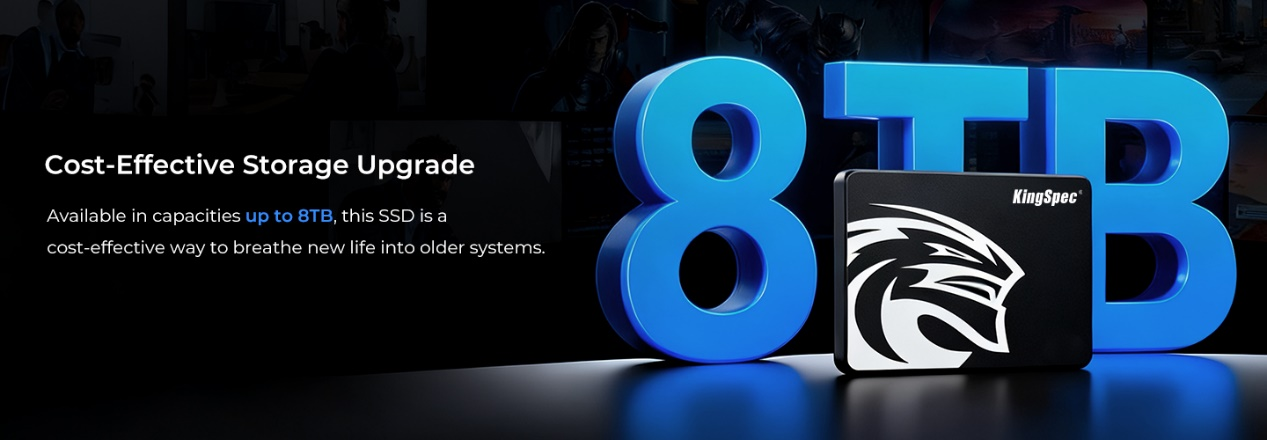
Both KingSpec P3 Series and XG 7000 Series provide 8TB massive storage option.
Random read/write performance (IOPS): This affects responsiveness more than sequential speed.
Flash type and endurance (TBW): TLC offers the best balance of performance and price, and a higher TBW means longer lifespan.
These indicators help you evaluate an SSD beyond marketing numbers.
3. Recommendations for different budgets and usage levels
While prices change often, users can still choose the right type of SSD based on their needs:
Low-budget users: SATA or PCIe 3.0 SSDs with stable performance. The KingSpec P3 Series is a budget-friendly gem—3-year warranty, 1.5 million hours MTBF, and 4x faster than traditional HDDs, perfect for cost-conscious users.
Older PC upgrades: PCIe 3.0 or 4.0 NVMe SSDs with good compatibility.
High-load users: PCIe 4.0 or 5.0 NVMe SSDs designed for fast workloads and long-term stability. The XG7000 Series shines here with diversified optimization technology, E2E data protection, and LDPC ECC, handling gaming, video editing, and large data tasks with ease.
4. When to buy your SSD
Finally, timing matters. Since SSD prices remain volatile, consumers can avoid overpaying by:
Avoiding impulse purchases during rapid price spikes
Monitoring price trends for several weeks
Buying during major shopping events or periods of price stability
Understanding the market cycle allows you to make smarter decisions, even during unpredictable price swings.
III. Looking Ahead: A New Storage Era Shaped by AI
In conclusion, the current SSD price increase is a direct result of the AI revolution. AI servers need far more DRAM and NAND Flash than traditional systems, and their demand grows faster than new production capacity can be built. As a result, the entire storage industry is now more strategic and more sensitive to changes in supply and demand.
The ongoing AI-driven “super cycle” may continue into the coming years. While supply shortages will eventually ease as manufacturers expand production, the importance of storage in the AI ecosystem will only grow. For consumers, understanding these market dynamics—rather than simply waiting for prices to fall—is the key to making a smart purchase.
When choosing a drive, it is more valuable to focus on stable performance, real usage needs, and reputable SSD suppliers rather than chasing the highest listed numbers.
If you are looking for reliable SSD solutions backed by strong quality control, consistent performance, and professional support, KingSpec is ready to help. As an experienced SSD supplier, KingSpec provides a wide range of solid-state drives suitable for office work, gaming, business applications, and industrial environments.
Upgrade your storage with confidence—choose KingSpec for long-term stability and trusted performance.