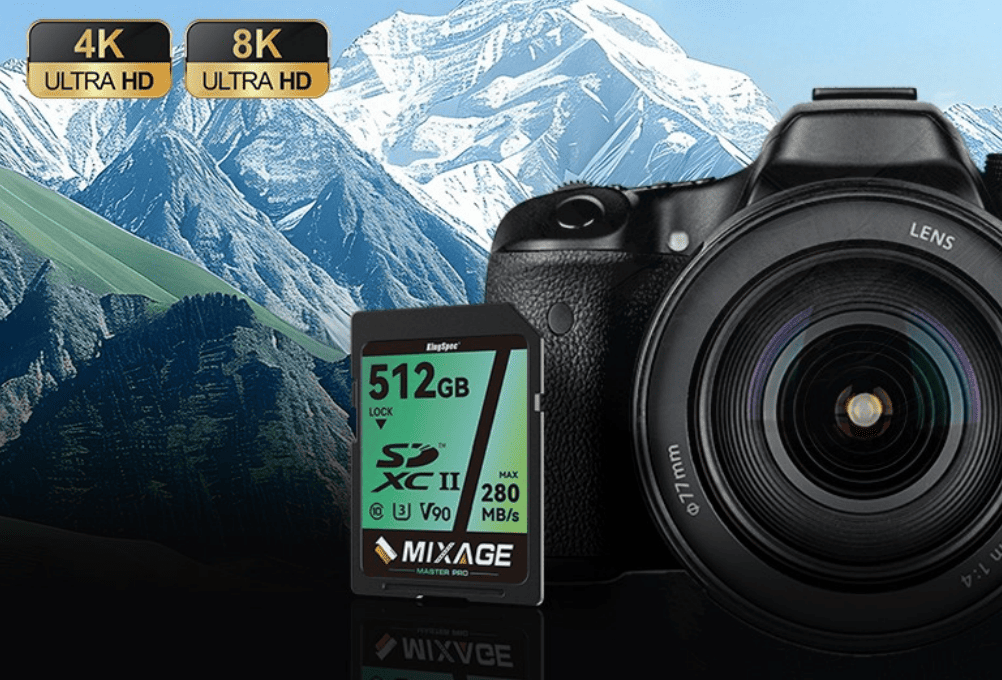
From smartphones and action cameras to mirrorless systems and cinema cameras, storage cards play a much bigger role than many users realize. As image resolution and video quality continue to rise, choosing the right memory card has become a key factor in ensuring smooth shooting and reliable data capture. To better understand how to select the right option, it is important to first look at why so many storage card types exist in the market.
Why Are There So Many Different Storage Card Types?
At first glance, many users wonder why phones, action cameras, and professional cameras rely on completely different storage cards. Similarly, they may notice that recording 4K or 8K video suddenly requires much higher card performance. The underlying reason lies in how fast image and video data has grown in size and complexity.
As resolution increases, cameras generate far more data per second. This places greater demands on sustained write speed, stability, and reliability. While casual photography may only need short bursts of data writing, professional video recording requires continuous, uninterrupted data flow. Because different devices and workflows place different demands on storage, no single card standard can cover every scenario effectively.
As a result, storage cards have evolved into a core performance component within modern imaging systems. From everyday recording to professional film production, the storage medium directly affects whether footage is captured smoothly or lost due to dropped frames.
A Quick Overview of Mainstream Imaging Storage Cards
To help users quickly build a clear understanding, the table below summarizes the most common storage card types used in imaging and video production today.
Storage Card Type | Interface Technology | Performance Positioning | Typical Use Cases |
SD Card (V30 / V60 / V90) | UHS-I / UHS-II | Medium to High | Photography, 4K video, selected 8K workflows |
TF (microSD) Card | UHS-I | Entry-Level | Action cameras, dash cams, mobile devices |
CFast Card | SATA | High Stability | Professional video cameras, broadcast systems |
CFexpress Type B | PCIe / NVMe | Ultra-High Performance | High-end photography, 8K video, cinema production |
In professional imaging, speed alone is not enough. Stability, sustained write performance, and long-term reliability are equally important. This is why specialized storage solutions continue to coexist rather than being replaced by a single universal standard.
SD Cards: The Most Widely Used and Mature Imaging Solution
Among all card formats, SD cards remain the most common and versatile choice in photography and video creation. However, not all SD cards offer the same level of performance.
Understanding Speed Classes
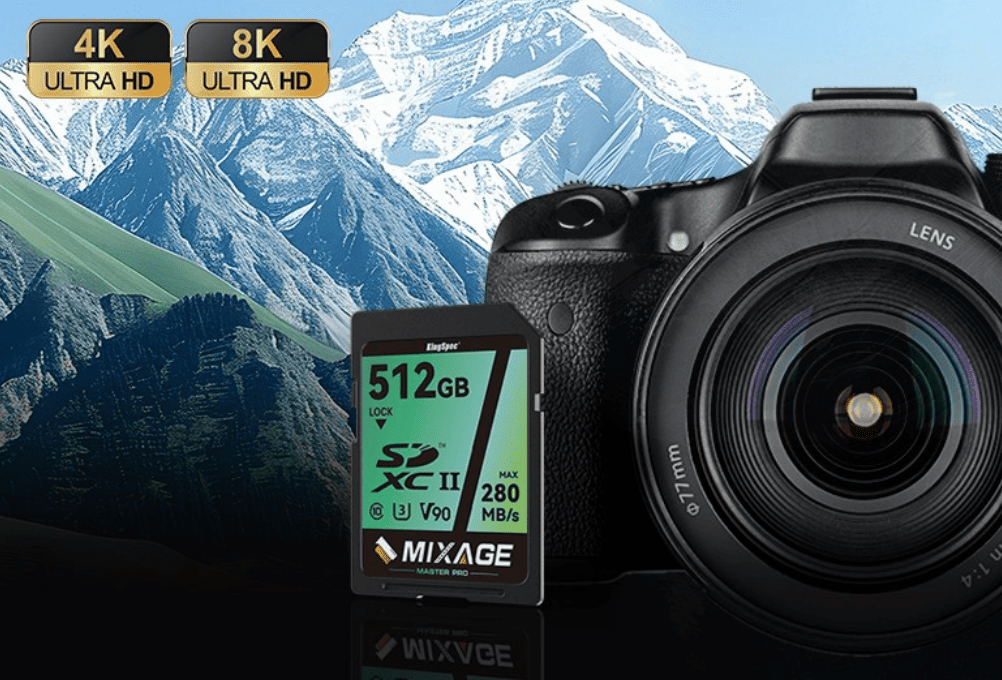
V30: Suitable for daily photography and standard 4K video
V60: Designed for high-bitrate 4K recording and Log profiles
V90: Required for 8K video and high-speed RAW burst shooting
These video speed classes indicate guaranteed sustained write performance, which is critical for modern cameras. KingSpec V90 SD Card is compatible with major camera brands such as Sony A7M5, Canon R50, and Nikon Z8, ensuring your content is always secured with every shot.
Compatible Devices and Use Cases
SD cards are widely used in mirrorless cameras, DSLR systems, drones, and professional camcorders. Typical applications include commercial photography, short video production, and high-frame-rate video recording.
Imaging-Focused SD Card Solutions
Professional-grade SD cards are optimized for consistent write speed, reliable high-bitrate recording, and long shooting sessions. By covering V30, V60, and V90 speed levels, they support users ranging from advanced enthusiasts to professional film crews who need dependable performance under demanding conditions.
TF (microSD) Cards: Compact and Convenient, with Clear Limits
In contrast, TF or microSD cards focus on portability and compatibility. Their small size makes them ideal for compact devices, but this also limits their performance potential.
Typical Applications
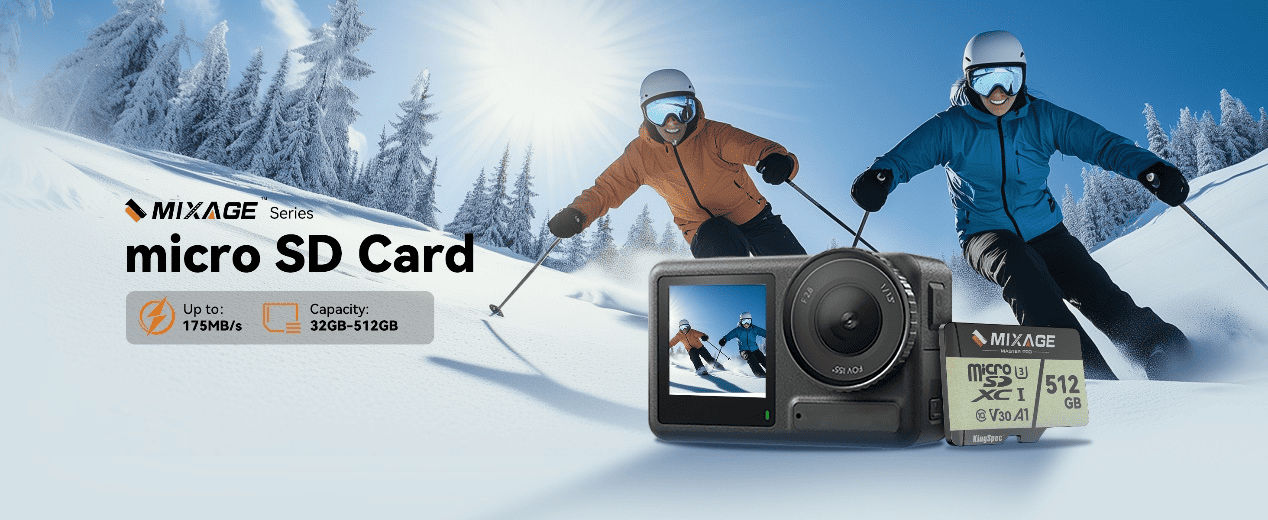
TF cards are commonly found in Insta action cameras, Dji drone, and mobile devices. They work well for casual recording, travel footage, and everyday video capture.
For example, if you want to record high quality video with Insta360 X5, the flagship 360 camera, KingSpec V30 MicroSD Card can help you. Whether you want to capture skiing, hiking, or diving, the KingSpec V30 MicroSD Card is always ready.
Performance Boundaries
While microSD cards can handle basic video recording, they are generally not the preferred choice for professional filmmaking. Sustained write speed and long-duration stability are more limited, which is why higher-grade SD, CFast, and CFexpress cards dominate in professional imaging environments.
CFast Cards: A Stability-Focused Choice for Professional Video Systems
CFast cards play an important role in professional video workflows, especially in broadcast and cinema applications.
Technical Characteristics
Based on the SATA interface, CFast cards deliver stable and predictable write performance. Their design prioritizes reliability and controlled latency rather than peak speed numbers.
Devices and Shooting Scenarios
CFast cards are widely used in cinema cameras, broadcast systems, and professional video recorders. Typical applications include RAW video capture, high-bitrate 4K recording, and long continuous shooting sessions.
KingSpec 1TB CFast Cards: CFast Memory Card 256G/512G/1T - KingSpec
Advantages in Professional Workflows
In demanding production environments, consistent write speed and data integrity are critical. CFast cards designed for professional use emphasize sustained performance, data security, and reliable operation under heavy workloads, making them a trusted option in established video systems.
CFexpress Type B: The Performance Ceiling for High-End Imaging
As camera technology advances, CFexpress Type B has become the preferred storage format for the most demanding imaging tasks.
Architecture and Performance
Built on PCIe and NVMe architecture, CFexpress Type B offers far greater bandwidth than traditional storage cards. This enables it to handle massive data streams generated by modern high-resolution sensors.
Where CFexpress Type B Excels
This format is widely used in high-end full-frame and medium-format cameras, 8K video systems, and high-speed burst photography. It supports fast buffer clearing, smooth 8K recording, and efficient professional workflows.
KingSpec 4TB CFexpress TypeB Memory Cards: CFexpress Type B Memory Card – High-Speed Storage for Professional Cameras | KingSpec
Supporting Next-Generation Imaging
For creators working with high-bitrate video and large RAW files, CFexpress Type B cards are designed to meet both current and future imaging demands, improving efficiency from capture to post-production.
Why Professional Imaging Requires Specialized Storage Brands
In professional photography and filmmaking, data loss is not an option. Footage cannot always be reshot, and storage failure can mean lost time, lost money, and lost creative work.
Professional creators therefore prioritize stability over peak speed, sustained write performance over short benchmarks, and data safety over raw capacity. Specialized imaging storage brands focus on these real-world requirements rather than consumer-oriented specifications.
By offering SD, CFast, and CFexpress solutions designed specifically for imaging workflows, professional storage brands support photographers and filmmakers throughout the entire creative process.
How to Choose the Right Storage Card for Your Needs
When selecting a storage card, users should start by confirming which card formats their device supports. Next, they should evaluate the resolution, bitrate, and shooting duration of their content. Finally, choosing the appropriate speed class and performance level ensures smooth recording and reliable data capture.
For professional creators, a dependable imaging storage solution matters far more than simply chasing the highest advertised speed.
Conclusion
From SD and TF cards to CFast and CFexpress Type B, each storage format exists to serve specific imaging needs. As video resolutions rise and workflows become more demanding, understanding these differences helps creators make informed decisions. A balanced choice based on device compatibility, shooting requirements, and long-term reliability ensures that storage never becomes the weak link in the creative process.