AAA Games Are Raising Hardware Requirements in 2026
Modern AAA games are pushing PC hardware further than ever before. With the release of Resident Evil 9: Requiem, many PC gamers have started reviewing their current system specifications to see whether their computers are ready for the next generation of titles.
Recent AAA games are built with much larger environments, higher-resolution textures, and more complex visual effects. Technologies such as real-time ray tracing, advanced lighting systems, and cinematic cutscenes require faster data streaming from storage and more available system memory.
Because of these changes, storage and memory performance now play a much bigger role in gaming performance than they did a few years ago. Even if a graphics card meets the minimum requirements, slow storage or insufficient memory can still affect loading times and overall gameplay smoothness.
Fortunately, as Capcom's next-generation survival horror title set for release in 2026, Resident Evil 9: Requiem is built on the upgraded RE neXt engine, featuring support for ray tracing, high refresh rates, and multi-perspective switching (first-/third-person). Following the series' tradition of user-friendly optimization, the PC version maintains modest hardware demands: the minimum spec only requires a mid-range older GPU, while the recommended spec offers ample performance headroom for smooth 1080p/1440p gaming at high settings. Let’s take a look at the official requirements.

Resident Evil 9 System Requirements Breakdown
Before planning any upgrade, it is helpful to look closely at the system requirements of Resident Evil 9. Understanding these requirements allows players to evaluate whether their current PC hardware is sufficient.
Minimum Hardware Requirements
According to official information, the minimum configuration includes graphics cards such as the GTX 1660 or RX 5500 XT. These GPUs are widely available and still used in many mid-range gaming PCs.
However, one important detail stands out: the game requires 16GB of system memory even at the minimum level. This means players who are still using 8GB RAM will likely need to upgrade before running the game comfortably.
In addition, the installation requires SSD storage instead of a traditional hard drive.
Recommended Hardware Requirements
For smoother gameplay and better visual quality, the recommended configuration includes hardware such as the RTX 2060 or RX 6600. These GPUs offer stronger performance for modern graphics features.
Once again, 16GB of RAM remains the baseline requirement, confirming that modern games increasingly rely on larger memory capacity.
Most importantly, the recommended setup clearly expects the game to be installed on a solid-state drive (SSD), especially NVMe-based drives that provide faster data access.
Why Modern AAA Games Depend on High-Speed SSDs
After examining the requirements, the next question becomes clear: why do modern games rely so heavily on fast storage?
Faster Game Data Loading
First of all, modern games contain large amounts of data. High-resolution textures, audio files, video sequences, and environmental assets all need to be loaded quickly while the game is running.
Traditional hard drives rely on spinning disks and mechanical read heads. Because of this design, they have higher latency and slower access speeds.
In contrast, SSDs use NAND flash memory and contain no moving parts. This allows them to read and write data much faster while maintaining lower latency.
As a result, installing games on an SSD can significantly reduce loading times.
Real-Time Asset Streaming
In addition, many modern game engines use real-time asset streaming. Instead of loading an entire level at once, the game continuously loads new areas, textures, and objects as the player moves through the environment.
If storage speed is too slow, players may notice problems such as:
A fast NVMe SSD helps prevent these issues by providing consistent high-speed data transfer.
DirectStorage Technology
Another important factor is DirectStorage, a technology developed for modern gaming systems. DirectStorage allows game data to move more efficiently from storage to the graphics card.
With traditional storage systems, data must pass through the CPU and memory before reaching the GPU. DirectStorage reduces this overhead by enabling faster transfer paths.
However, this technology is designed to work best with high-speed NVMe SSDs, which provide much higher bandwidth than older storage devices.
PCIe 4.0 vs PCIe 5.0 SSDs for Gaming
Because SSD technology continues to evolve, many gamers now wonder which type of drive is best for modern games.
PCIe 4.0 NVMe SSD
PCIe 4.0 SSDs can reach speeds of around 7500 MB/s. These drives are currently considered an excellent balance between performance and cost, making them very popular among gaming PC builders.
PCIe 5.0 NVMe SSD
The newest PCIe 5.0 SSDs offer even higher bandwidth and extremely fast transfer speeds. Although not every game fully uses this level of performance yet, these drives provide a more future-ready storage platform.
Recommended Storage and Memory Upgrades for Gamers
Given these hardware trends, upgrading storage and memory can significantly improve gaming performance.
Entry‑Level Setup: Targets 1080p/30 FPS at minimum settings (ray tracing off), ideal for budget‑conscious players who prioritize a playable experience.
High‑End Setup: Delivers 2K/60 FPS with high settings, ray tracing enabled, and DLSS/FSR upscaling—perfect for players seeking an immersive experience and willing to invest in hardware.
Important Notes: The game requires 16 GB of RAM (for all setups) and runs exclusively on 64‑bit Windows 11 (please update in advance). A 50 GB+ SSD is strongly recommended; mechanical drives will result in noticeable loading delays.
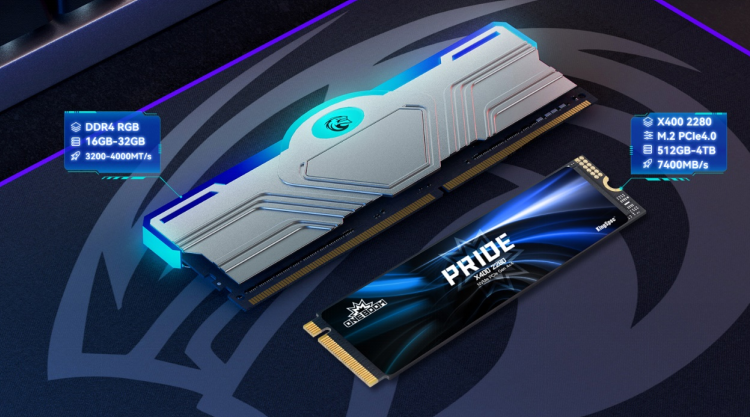
Entry‑Level Gaming Setup
For most players who play at 1080p resolution, a balanced system upgrade is usually sufficient.
A common configuration includes:
A PCIe 4.0 NVMe drive offers fast loading speeds and stable performance for modern games.
For example, the OneBoom X400 PCIe 4.0 SSD from KingSpec provides strong sequential read speeds, stable performance, and efficient thermal design suitable for gaming PCs.
Combining this type of SSD with adequate system memory helps ensure smoother gameplay and faster game initialization.
PCIe 4.0 X400 Series – High-Performance NVMe SSD | KingSpec
DDR4 RGB Silver X – High-Speed Gaming & Desktop Memory | KingSpec
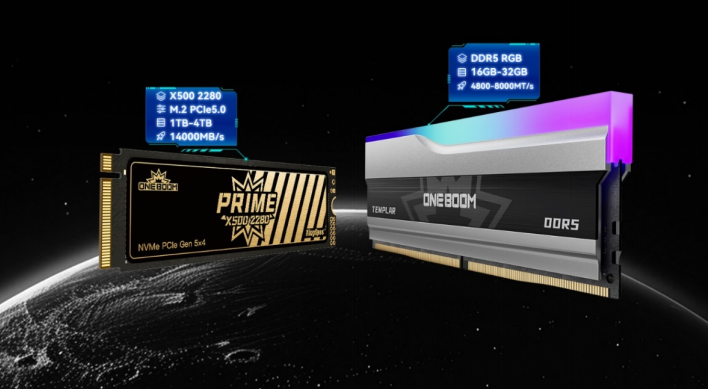
High-Performance Gaming Setup
For enthusiasts aiming for higher resolutions, ultra graphics settings, or long-term hardware upgrades, a higher-end configuration may be preferred.
Such a system may include:
PCIe 5.0 SSDs offer extremely high data bandwidth, making them well suited for future game engines that rely heavily on fast asset streaming.
KingSpec OneBoom X500 PCIe 5.0 SSD—designed to meet demanding next‑gen workloads with exceptional sequential read speeds, sustained stability under heavy use, an efficient thermal design to prevent throttling, and a compelling value proposition for its performance tier. Paired with OneBoom DDR5 RGB memory, which offers up to 8000MT/s extremely high frequencies, boosting data transfer rates to ensure no memory bottleneck arises—even when maxing out visual settings and ray tracing.
PCIe 5.0 X500 Series SSD – Ultra-Fast NVMe Storage | KingSpec
DDR5 RGB TEMPLAR – High-Performance Gaming Memory with RGB Lighting | KingSpec
Conclusion
Overall, modern AAA games are placing greater demands on PC hardware than ever before. Titles such as Resident Evil 9 highlight how larger environments, detailed textures, and real-time streaming systems require both sufficient memory and high-speed storage.
While graphics cards remain important, upgrading storage and RAM can deliver immediate improvements such as:
For gamers planning to upgrade their systems in the coming years, choosing a reliable SSD with strong performance and stability is an important step toward maintaining a smooth gaming experience.
As a professional SSD manufacturer, KingSpec provides a range of consumer storage solutions designed for modern PCs, gaming systems, and high-performance applications. Whether you are upgrading an existing gaming PC or building a new system, exploring KingSpec’s NVMe SSD lineup can help you achieve faster storage performance and a more reliable gaming platform.